
Solar Energy Systems Types & Application Solutions
The Middle East and Africa are among the most suitable regions in the world for solar energy due to high solar irradiation, vast remote areas, and rising electricity and fuel costs. Solar power has become a reliable and sustainable solution for residential, agricultural, commercial, and industrial applications.
What You Need to Know About Solar Energy Typs
Discover the different types of solar energy systems designed to meet residential, commercial, and large-scale energy needs.
Grid-Connected Solar Systems
Off-Grid Solar Systems
Hybrid Solar Systems
Solar Water Pumping Systems
Utility Scale Solar Power Systems
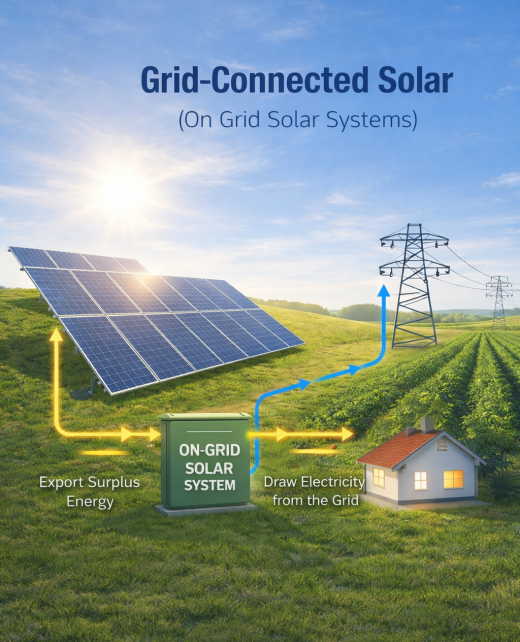
Table of Contents
ToggleSmart Solar Energy Grid Connection
Grid-Connected Solar Systems (On-Grid Solar Systems)
Grid-connected solar systems (On-Grid) operate in integration with the public electricity grid. Energy is generated from solar panels and used directly to supply electrical loads. If there is surplus energy beyond the required loads, it is exported to the electrical grid. Electricity is drawn from the grid when needed, especially when solar irradiance is low or unavailable in the evening. This type of system is considered a model of sustainability.
Advantages
- Lower cost compared to off-grid systems
- No need for battery storage
- Significant reduction in electricity bills
- Longer operational lifespan
Applications
- Residential homes within cities
- Factories and commercial facilities
- Government institutions
- Hospitals and schools
Off-Grid Solar Systems
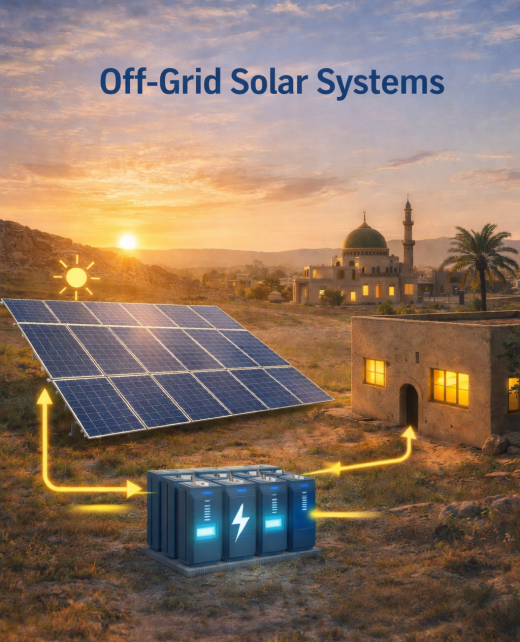
Off-grid solar systems operate completely independently from the public electricity grid and rely on batteries to store energy for use at night or during cloudy days. Off-grid solar energy systems are considered the optimal choice in many parts of the Middle East that suffer from weak or non-existent electricity grids. These systems depend on solar panels and batteries to provide reliable, standalone power around the clock.
Advantages
- Complete independence from the electricity grid
- Suitable for remote areas
- A stable power source in locations that experience frequent power outages
Applications
- Villages and rural and remote areas
- Farms and agricultural projects
- Homes far from the electricity grid
- Rest houses and camps
Reliable Solar Power Anywhere
Solar With Battery Backup
Hybrid Solar Systems
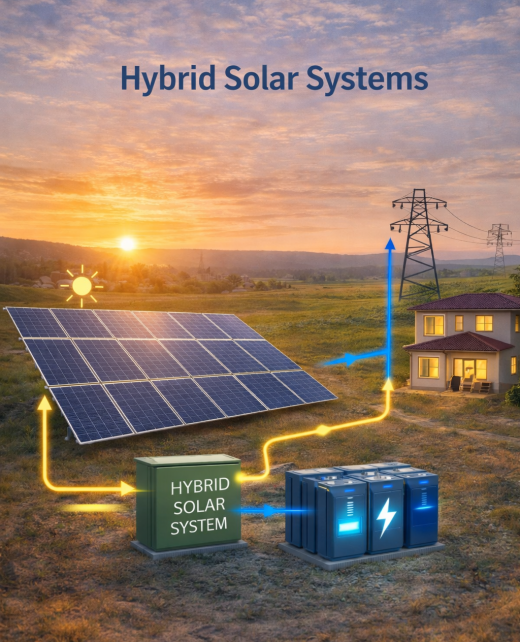
Hybrid solar systems combine both grid-connected and off-grid systems. They operate in parallel with the public electricity grid while also incorporating batteries for energy storage. These systems are particularly useful in countries that experience frequent power outages, as they are considered an ideal solution by combining the utility grid with battery storage to ensure continuous power supply.
Advantages
- Continuous electricity supply
- Storage of excess energy
- Protection against power outages
- High operational flexibility
Applications
- Modern homes within cities
- Companies and institutions
- Hospitals and medical centers
- Hotels
- Locations that experience frequent power outages
Solar Water Pumping Systems
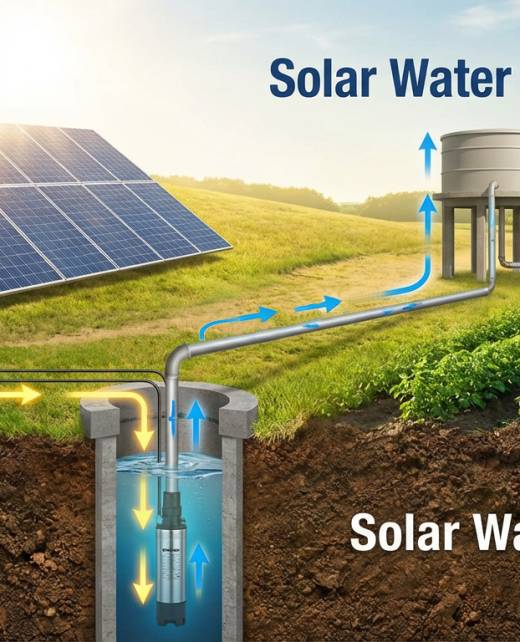
Solar water pumping systems are used to operate water pumps using solar energy without the need for conventional electricity or fuel. They are among the most common solar energy applications in agricultural countries and are considered an ideal, sustainable solution for powering well water pumps and irrigation pumps without the need for fuel or an electricity grid.
Advantages
- Significant savings in fuel and electricity costs
- Continuous operation during daylight hours
- Environmentally friendly
- Low maintenance requirements
Applications
- Agricultural irrigation
- Water wells
- Homes far from the electricity grid
- Livestock projects
- Desert areas
Solar Powered Water Pumping
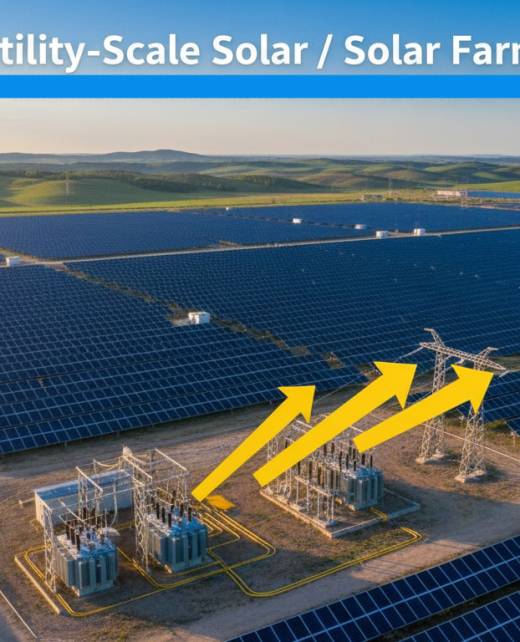
Large Scale Solar Power
Utility Scale Solar Power Systems (Solar Power Plants)
Large-scale solar power systems, also known as solar power plants or solar farms, are major projects that involve installing thousands or even millions of solar panels over vast areas of land to generate electricity and sell it directly to the public electricity grid.
These plants are primarily used for commercial and investment purposes, as they are connected to the national grid through special substations, and the electricity produced is sold to utility companies or government entities under long-term contracts. Production capacity typically starts from 1 megawatt and can reach hundreds of megawatts or even gigawatts.
Advantages
- Stable, long-term source of income
- Long-term Power Purchase Agreements (PPAs)
- Attractive return on investment
- Low operating and maintenance costs
- Clean and sustainable energy
Applications
- Local and international investors
- Energy companies
- Governments and public sector entities
- National renewable energy projects