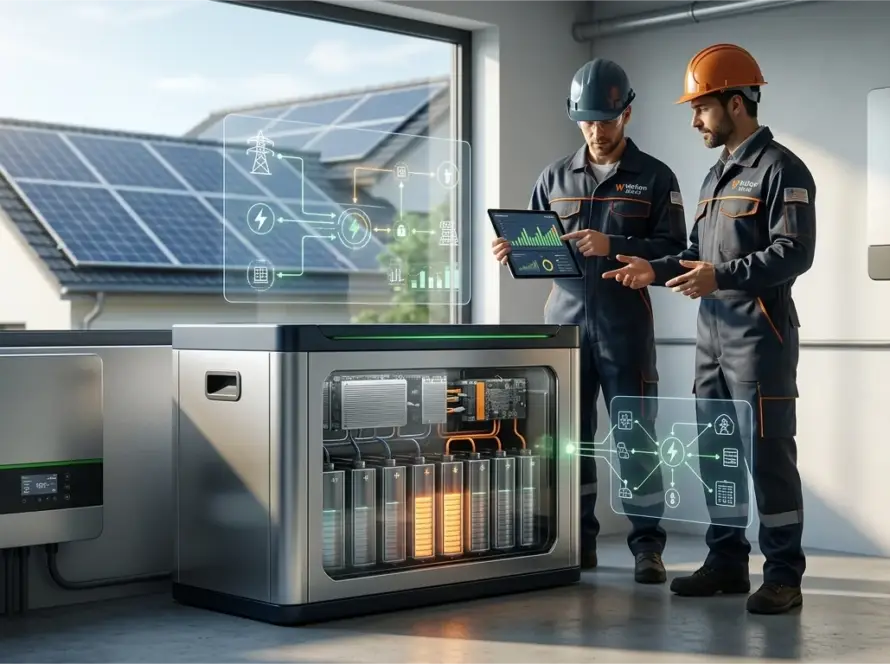
The value of your solar system isn’t measured by how much electricity the solar panels generate, but by how much energy the batteries can store efficiently and without waste.
The loss of a portion of the electrical energy stored in batteries remains one of the biggest obstacles in solar energy systems, even with significant advances in modern technology. This loss not only reduces the actual benefit of the energy produced but also directly affects system stability and increases reliance on additional sources.
✅ The solution is simple yet effective: improving the efficiency of solar batteries.
Choosing high-efficiency batteries not only reduces waste but also balances production and consumption, providing stable and reliable energy in the long term. Every watt produced becomes truly valuable, turning your investment in solar energy into a sustainable energy source that isn’t wasted.
Invest in the efficiency of your solar batteries now. Discover Wilion’s solutions for high-performance solar energy systems and get the most out of every watt of electricity.
Discover how Welion Solar’s lithium batteries deliver efficient energy storage, high performance, and reliable power for a wide range of solar applications.
Explore Solar Battery Manufacturers →Table of Contents
ToggleSolar Battery Efficiency: Everything You Need to Know to Maximize Your Solar System’s Performance
Solar battery efficiency measures the percentage of energy that can actually be used compared to the energy stored. This efficiency is also known as “round-trip efficiency.” Typically, modern lithium batteries have an efficiency of around 95%, while lead-acid batteries range between 70% and 80%.
The efficiency of solar batteries is not just a theoretical number; it actually reflects the battery’s true ability to convert stored energy into usable energy. High-efficiency batteries lose less energy during charging and discharging, which means that every kilowatt-hour stored is utilized to the fullest extent possible.
Lithium-ion batteries typically achieve an efficiency of around 95%, making them the ideal choice for those who want to get the most out of their solar system. In contrast, lead-acid batteries offer lower efficiency, ranging between 70 and 80%, resulting in greater loss of stored energy.
Why is battery efficiency important in a solar system?
Battery efficiency plays a pivotal role in any solar system, as it determines the amount of stored energy that can actually be retrieved. High-efficiency batteries reduce waste, enhance reliance on solar energy, and ensure stable performance and better energy consumption, while extending the lifespan of the solar system and reducing the need to expand the size of the panels or add additional batteries.
Every kilowatt-hour stored must have real value… that is the secret to ideal solar energy systems
The impact of battery efficiency on the solar system:
- Maximizing Energy Utilization:
High-efficiency batteries, such as lithium batteries with efficiencies ranging from 85% to 95%, lose less energy during charging and discharging, thereby providing the maximum possible amount of energy for residential or commercial use. - Energy Continuity and Savings:
High-efficiency batteries enable the storage of excess energy during the day for use at night or on cloudy days, reducing reliance on the electrical grid and ensuring a stable power supply to devices. - Reducing System Size and Costs:
The higher the battery efficiency, the less need there is for additional solar panels and batteries to cover consumption, which reduces the initial investment and improves the overall system design.
- Increased system lifespan and long-term performance:
High-efficiency batteries can withstand more deep discharge cycles without rapid degradation, maintaining optimal system performance for many more years.
Reliable backup power:
During a power outage, high-efficiency batteries provide continuous, reliable power to keep essential devices running without interruption.
Factors Affecting the Efficiency of Solar Batteries
Several factors affect the efficiency of solar batteries, most notably temperature, depth of discharge, battery type, and battery age. These factors determine the amount of energy that can actually be recovered compared to what was stored, and explain the differences in efficiency between one battery and another, even if they are of the same type.
The actual efficiency of solar batteries depends on several factors that determine the amount of energy recovered from the stored energy. These factors explain the differences in battery performance from one system to another and underscore the importance of understanding them in order to select the appropriate battery and maximize the efficiency of the solar system.
Furthermore, knowing the factors that affect the efficiency of solar batteries not only helps improve daily performance but also contributes to extending battery life and reducing waste, thereby increasing the value of the investment in solar energy.
Here is a list of the key factors that affect the efficiency of solar batteries:
- Temperature.
- Depth of Discharge (DoD).
- Battery Type.
- Battery Age.
🚫 Don’t leave your project to chance ⚡️ Rely on Willion to supply solar batteries with guaranteed performance and a long-term warranty |
1. The Effect of Temperature on Solar Battery Efficiency and Solar System Performance
Temperature plays a pivotal role in determining the efficiency of solar batteries, as batteries perform best within a moderate range of 15 to 35 degrees Celsius. High temperatures accelerate battery degradation and reduce their lifespan.
Extreme cold, on the other hand, reduces available capacity and slows down charging and discharging processes, which directly affects the actual amount of usable energy. Therefore, proper thermal management is essential for maintaining battery efficiency and ensuring stable and reliable long-term performance of the solar system.
The Effect of Temperature on Solar Battery Efficiency:
- High Temperatures:
It increases the rate of chemical reactions inside the battery, leading to electrolyte degradation and accelerating the corrosion of internal components. In some cases, battery life may be cut in half when temperatures exceed the optimal range. - Low Temperatures:
Slow down chemical reactions, reducing the battery’s ability to fully discharge energy and making charging less efficient. In extreme conditions, freezing can cause permanent damage to certain types of batteries.
Practical tips for maintaining battery efficiency:
- Install batteries in well-ventilated areas to prevent overheating.
- Insulate batteries in extremely cold environments to maintain performance.
- Use charging management systems that support thermal compensation to automatically adjust the voltage based on temperature.
2. The Effect of Depth of Discharge (DoD) on Solar Battery Efficiency
DoD directly affects the efficiency and lifespan of a solar battery (Depth of Discharge (DoD) refers to the percentage of energy used from the battery compared to its full capacity); as the depth of discharge increases, the number of charge and discharge cycles decreases, and stress on the battery components increases.
LiFePO4 batteries have a high tolerance for deep discharge between 80% and 95% while maintaining their efficiency. For lead-acid batteries, it is recommended not to discharge them beyond 50% to ensure long-term performance and a longer lifespan.
To explain the effect of depth of discharge on solar battery efficiency more precisely, the main points can be summarized as follows:
- Depth of discharge plays a pivotal role in determining the extent to which a solar battery’s actual capacity is utilized during each charge-discharge cycle.
- When a large percentage of the energy is repeatedly discharged, the battery is subjected to additional stress on the electrodes and electrolyte, which accelerates their degradation and reduces the recoverable energy.
- Repeatedly discharging lead-acid batteries by more than 50% significantly reduces their lifespan. In contrast, modern lithium-ion batteries can withstand deep discharges of up to 95% without significant loss of performance, allowing for the efficient utilization of their full storage capacity.
- Selecting the appropriate depth of discharge for each type of battery not only maintains their efficiency but also contributes to the stability of the solar power system and improves energy consumption efficiency.
- By adhering to optimal depth-of-discharge limits, the battery maintains its performance for longer, reducing the need for frequent replacement and increasing the return on investment in solar energy systems.
⚡ Every watt you store should work in your favor ✅ Willion solar batteries give you the highest efficiency and the least energy loss in every operating cycle. |
3. How Does Battery Type Affect the Efficiency and Performance of Solar Energy Systems?
The type of battery directly determines the efficiency of solar energy storage and the lifespan of the energy system. Lithium-ion (LiFePO4) batteries offer high efficiency ranging from 90–95% and a lifespan of over 5,000 charge and discharge cycles, while lead-acid batteries have lower efficiency that ranges between 70–80% and a limited cycle count of 400–500 cycles. The choice of battery type affects the amount of usable energy, depth of discharge, and charging speed.
The Most Important Types of Solar Batteries and Their Impact on Efficiency:
Lithium-ion Batteries (LiFePO4):
- Efficiency: 90–95% with low energy loss during charging and discharging, which increases system efficiency.
- Depth of Discharge (DoD): 80–95% of the energy can be discharged without affecting battery life.
- Lifespan: Over 5,000 charge and discharge cycles, or the equivalent of 10–15 years of continuous residential use.
- Weight and Size: Lightweight and compact, suitable for installation in limited spaces.
- Maintenance: Virtually maintenance-free, reducing operating costs.
- Efficiency: Ranges from 70–80%, with greater energy loss in the form of heat, which reduces the system’s efficiency compared to lithium batteries.
- Depth of Discharge (DoD): It is recommended not to exceed 50% to preserve battery life.
- Lifespan: 400–500 charge-discharge cycles, or 3–5 years, which is significantly shorter than that of lithium batteries.
- Cost: Low initially, but they require periodic maintenance (such as adding water or monitoring voltage).
Start Your Solar Journey with Confidence
Find the right solar battery solution for your home and get expert guidance from Welion Solar every step of the way.
Contact Us Today→4. How Age Affects the Efficiency of Solar Batteries
- A battery’s age directly affects its ability to store and release energy, as its efficiency gradually declines over time and with continuous use. The typical lifespan of batteries ranges from 5 to 15 years, or the equivalent of 3,000–7,000 charge cycles, and efficiency may drop to 70–80% of the original capacity over time.
The effect of age on battery efficiency:
- Capacity Degradation As charging and discharging cycles repeat, the battery loses some of its ability to store energy, which means less power is available for use, especially at night or when the sun isn’t shining.
- Increased Internal Resistance: Over time, the resistance inside the battery increases, reducing charging and discharging efficiency and causing some energy to be lost as heat rather than stored.
- Impact of Cycle Life: Each full charge cycle gradually reduces the battery’s efficiency; intensive use (especially deep discharges) accelerates performance degradation and shortens the battery’s lifespan.
- The Effect of Age on System Stability: Older batteries may suffer from voltage instability or poor performance, which affects the efficiency of the entire solar system and reduces its reliability.
- Variations in Lifespan by Battery Type:
- Lithium batteries: Typically last 10–15 years with a slow decline in efficiency.
- Lead-acid batteries: Shorter lifespan of 3–7 years with a faster decline in performance.
How do you choose a high-efficiency solar battery?
To choose a high-efficiency solar battery that represents a long-term investment, it is recommended to focus on lithium iron phosphate (LiFePO₄) technology, which offers a long lifespan (6,000 charge cycles or more), a high depth of discharge (90%–95%), and high energy conversion efficiency (>90%). A smart Battery Management System (BMS) enhances safety and performance, while selecting an appropriate capacity to cover your daily consumption ensures system stability and long-term efficiency.
Steps for choosing the best high-efficiency solar battery:
- Battery Type (Technology): LiFePO₄ batteries offer the highest efficiency, excellent safety, and a long service life compared to lead-acid or other types of lithium batteries.
- Depth of Discharge (DoD): Refers to the percentage of usable energy that can be discharged without damaging the battery. Lithium batteries support 90%–95%, allowing most of the stored energy to be used safely.
- Round-Trip Efficiency: Choose a battery with an efficiency of ≥90% to minimize energy loss during charging and discharging and achieve stable performance for the solar system.
- Battery Life and Charge Cycle Count (Cycle Life): Batteries that provide ≥6,000 charge cycles ensure consistent performance for many years, making the investment more cost-effective.
- Battery Capacity: Measured in kilowatt-hours (kWh), it should cover the daily consumption of the home or energy system without incurring additional costs for unused capacity.
- Battery Management System (BMS): Essential for protection against overcharging, deep discharge, and overheating, thereby preserving battery life and efficiency.
- Scalability: Choose modular batteries that allow you to easily add additional units to meet future increases in energy demand.
⚡️ The difference between a successful system and a failing one starts with the battery. ✅ Choose Willion Solar Batteries to provide reliable energy storage solutions for your project. |
Efficiency Isn't an Option…. It’s Your Best Investment
Battery efficiency is more than just a technical specification. It is the metric that defines your return on investment. Choosing a low-efficiency battery is like pouring water into a leaking bucket mean you will lose energy and money silently every single day.
By prioritizing Wilion’s high-efficiency LiFePO4 solutions, you ensure that 95% of the power you harvest is actually there when you need it.
Don’t let your energy go to waste. Invest in a system designed for maximum recovery and long-term stability. Choose Wilion, and make every watt count.
Frequently Asked Questions:
The difference between battery efficiency and the efficiency of the entire solar system lies in the fact that battery efficiency refers to the percentage of energy that can be recovered after storage, compared to the energy that entered it, that is, the amount of energy lost during charging and discharging (which is often 90–95% for lithium batteries).
The efficiency of the entire solar system, on the other hand, is broader, as it encompasses the performance of all components (such as solar panels, the inverter, the battery, and wiring) and thus reflects the final amount of energy that can actually be used within the home or facility.
The best solar battery for home use is the lithium battery (LiFePO4), thanks to its long lifespan, high efficiency, and ability to operate daily without maintenance. Although they are more expensive than traditional lead-acid batteries, they offer better performance and lower long-term costs, making them the ideal choice for most modern solar energy systems.
No, a car battery is not suitable for use in a residential solar system. It is designed to provide a short burst of power to start the engine, not for continuous or long-term discharge. For residential use, specialized solar batteries such as lithium batteries or deep-cycle lead-acid batteries are the best choice for long-lasting performance and higher efficiency.