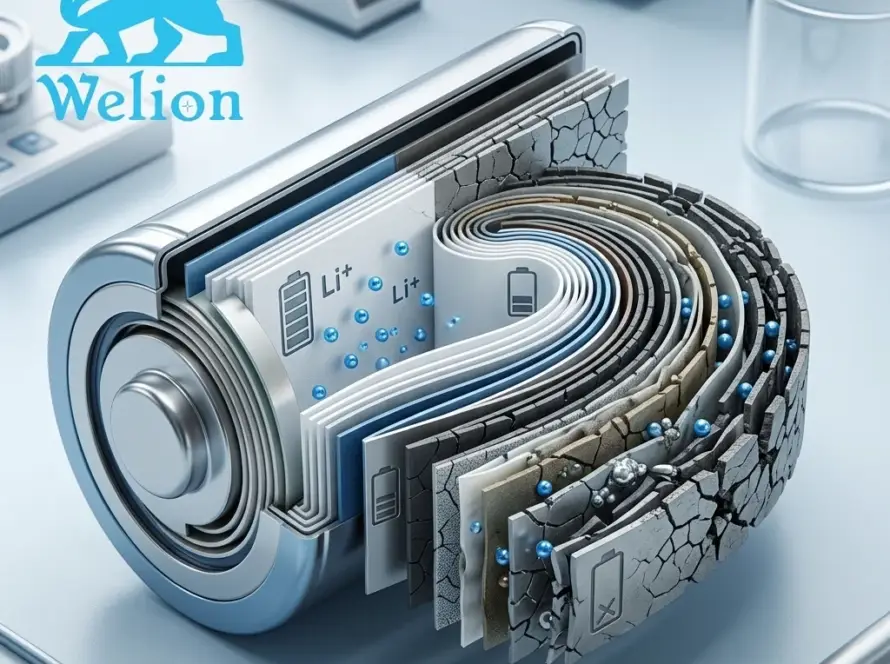
In regions where ambient temperatures regularly exceed 45°C, solar battery failure is not a rare event, it is a predictable outcome of thermal stress.
In high-temperature environments, not all batteries perform at the same level of efficiency. Some batteries lose significant lifespan and performance, while solar batteries for hot climates are designed for maintaining stability and efficiency even under extreme heat.
Choosing the right battery is not just a technical decision, it’s a long-term investment that directly leads to:
- Longer battery lifespan.
- Better system performance and stability.
👉Don’t leave your system’s efficiency to chance.
In this article from Welion Solar, the leading supplier of solar batteries, we will guide you through best battery technologies for hot climates, highlighting their key differences and proven reliability.
Take control of your energy future. Choose Welion Solar for premium battery solutions that offer the highest cycle life and maximum return on investment.
Maximize Your Battery’s Lifespan →Table of Contents
ToggleHow Heat Affects Solar Batteries
High temperatures have a detrimental effect on solar batteries, leading to reduced performance, accelerated internal degradation, and an increased risk of damage or overcharging.
Solar batteries perform optimally at around 25°C, any temperature increase beyond this point triggers accelerated chemical reactions that damage their internal components.
This thermal buildup may not be immediately noticeable, but it gradually accelerates battery degradation over time. Its effects can be summarized as follows:
- Reduced Efficiency and Storage Capacity:
Fluctuations in internal resistance reduce the efficiency of the solar battery. Resistance initially decreases at moderate temperatures (25–40°C) but rises as thermal degradation begins (45–50°C), lowering charge/discharge efficiency and limiting usable capacity of the battery. - Overcharging and Swelling Risks:
Overcharging and Swelling: Heat increases the float current, raising the risk of overcharging, which can deform the battery casing or cause swelling due to internal gas pressure. - Electrolyte Evaporation:
In flooded and tubular batteries, extreme heat causes electrolyte to evaporate and cells to dry out, damaging electrodes and impeding ion movement. - Increased Self-Discharge Rate:
Batteries lose stored energy faster in hot environments, as side reactions consume charge even without any load. - Lifespan Degradation:
These combined effects accelerate corrosion of metal grids and internal components, significantly shortening the operational lifespan of solar batteries.
Note: A common technical guideline states that every 10°C rise above the optimal temperature (25-30°C ) can theoretically accelerate degradation, potentially by up to 50%, according to thermal acceleration models.
Best Battery Types for Hot Climate Regions
Lithium batteries are ideal for high-temperature environments, withstanding temperatures above 45°C and offering a long lifespan of up to 15 years.
Gel batteries are also a reliable and less expensive option, while tubular batteries offer longer operational life than conventional flooded batteries used in solar energy systems.
Here, we highlight the most suitable types of solar batteries for hot climates:
- Lithium Batteries: These batteries feature high thermal stability and excellent management of internal reactions, reducing the risk of thermal degradation. They offer up to 95% charging and discharging efficiency, minimizing heat loss, and have a long lifespan of 10–20 years depending on operating conditions.
- Gel Batteries: Among the most stable lead-acid solutions for hot environments, gel batteries use a silica-based gel that reduces electrolyte evaporation and increases resistance to drying. Sealed and maintenance-free, they are a reliable choice for high-temperature regions.
- Tubular Batteries: A durable traditional option, tubular batteries are designed to minimize active material loss due to heat, allowing longer life cycles than conventional flooded batteries. However, they require periodic maintenance and proper ventilation.
Looking for solar batteries that maintain performance and lifespan even in high temperatures?
Contact Welion Solar, a leading supplier of Lithium and Gel batteries designed for hot climates.
Contact Us →Comparison of Solar Battery Types in Hot Climates
| Lithium | Gel | Tubular | |
|---|---|---|---|
|
Max Temperature |
50-55 °C |
40-50 °C |
45-50 °C |
|
Efficiency |
90% |
80-85% |
70-75% |
|
Lifespan |
10-15 years |
5-10 years |
6-8 years |
|
Maintenance |
Low |
very low |
high |
Why Lithium Batteries Perform Well in Heat
Lithium batteries (such as the Lithium Battery 10KWh) perform best at moderate temperatures (25-30°C). At these levels, heat accelerates chemical reactions and ion movement within the electrolyte, reducing internal resistance and enhancing discharge efficiency.
However, exposure to high temperatures above 50°C can damage lithium batteries, shortening their lifespan and accelerating degradation.
The following list explains the reasons for optimal battery performance in moderate heat:
- Enhancing Ion Movement:
Moderate heat lowers the viscosity of the electrolyte, allowing lithium ions to move more quickly and smoothly between the positive and negative electrodes. This improves battery response time and operational efficiency. - Reducing Internal Resistance:
Moderate heat reduces a cell’s internal resistance, minimizing energy loss during charging and discharging and ensuring more stable voltage, which leads to better performance than in cold conditions. - Accelerating Electrochemical Reactions:
Heat stimulates the chemical reactions that generate current, enabling the battery to utilize its storage capacity more efficiently and reducing energy wasted in side reactions.
Gel Batteries in High Temperatures
Gel solar batteries are among the most stable and reliable Solar Batteries for Hot Climates. Their performance surpasses traditional flooded batteries due to their unique gel composition and sealed design. A common example is the Gel Battery 12V – 100A.
This stability is mainly due to their ability to withstand heat and minimize electrolyte evaporation, making them suitable choices for solar energy systems in desert environments like Suadi Arabia or UAE.
The following are the key features of gel batteries in hot conditions:
- Thermal Degradation Resistance:
A thermally stable gel electrolyte provides strong resistance to heat-induced degradation, reducing the risk of damage at elevated temperatures. - Sealed and Safe Design:
Their airtight construction prevents gas emissions and acid leakage, ensuring safe operation and maintaining component efficiency in high temperatures. - Longer Service Life:
Gel batteries can withstand relatively high temperatures (up to 60°C in some cases) with minimal risk of cell drying, as they do not require distilled water refilling or regular maintenance. - Stable Deep Discharge Performance:
They deliver consistent performance across repeated charge and discharge cycles, ensuring reliable power even in harsh conditions.
Tubular Batteries in High Temperatures
Tubular batteries are among the most common and reliable Solar Batteries for hot climates. Their reliability comes from their interlocking cylindrical plate architecture, which provides strong structural stability and consistent discharge performance.
A typical example is the Tubular Battery 12V- 110Ah.
However, high heat poses a fundamental challenge, as it leads to:
- Accelerated internal chemical reactions.
- Grid corrosion and water loss.
- Faster overall battery lifespan.
Important technical note on tubular batteries: The battery’s lifespan can be reduced by half for every 10°C increase above the optimal range.
On the other hand, To maintain performance and protect against overcharging and high temperatures stress, management protocol must be followed, including:
- Adjusting Charge Settings: Reduce charging voltage during summer to match temperature compensation (typically 13.8–14.0V). Use appropriate charge controllers (such as MPK Controller 60 A) to prevent electrolyte boiling and evaporation.
- Current Control: Maintain charging current within 10% to 15% of the battery capacity (e.g., 20 Amps for a 200 Ah tubular battery).
- Thermal and Environmental Management: Ensure proper ventilation in shaded areas to dissipate heat and prevent excessive temperature rise.
- Maintenance and Monitoring: Regularly check distilled water levels and clean terminals. Avoid deep discharge beyond manufacturer recommendations to protect internal components.
Tips for Using Solar Batteries in Hot Climates
To ensure sustainable and reliable performance for your solar battery, you must adhere to the technical standards regarding the operating environment and ventilation, including how to determine the most suitable location for battery installation while taking cooling into account.
You should also adhere to the charging and discharging protocols, which include optimizing the installation environment, calibrating charge controllers, adjusting lithium settings, managing consumption patterns, and following preventive maintenance practices.
The following list illustrates the most important operation and ventilation standards for solar batteries in high temperatures:
- Installation Location: Install batteries in cool, dry, and shaded areas, away from direct sunlight. In extreme conditions, use thermally insulated rooms or air-conditioned enclosures.
- Heat Dissipation: Ensure continuous airflow around the batteries to dissipate heat generated during charging and discharging. Use active ventilation (fans) when necessary.
👉In the other hand, the charging and discharging protocols, they include the following:
- Charge Controller Calibration: Adjust the charge controller to compensate for temperature by lowering the charging voltage (e.g. around 13.8V, depending on battery type) to prevent overcharging or electrolyte boiling.
- Lithium Settings (LiFePO4): Set the float voltage for LiFePO4 batteries between 3.40–3.45V per cell to maintain chemical stability.
- Consumption Pattern: Avoid deep discharges and minimize charging during peak heat periods whenever possible.
👉As for the preventive maintenance instructions (depending on the battery type), they are as follows:
- Flooded and Tubular Batteries: Regularly check distilled water levels to compensate for evaporation caused by heat, ensuring that internal plates remain fully covered.
- Dry Systems (Gel/AGM/Lithium): Although maintenance requirements are lower, monitor the Battery Management System (BMS) and verify its settings to ensure proper thermal protection.
- Connection Safety: Inspect cables and terminals periodically (every ~3 months) to remove corrosion and salt buildup, which occur more rapidly in hot climates.
Discover what is the solar battery through the comprehensive guide to solar batteries from Welion Solar company.
Heat vs Efficiency: Choose Your Battery Wisely
In hot climates, the battery is not just an additional component, it is the key factor that determines the success or failure of any solar power system.
Choosing the wrong solar battery could mean:
- Reduced system performance.
- Shortened battery lifespan.
Adopting the best solar batteries for hot climates will lead to:
✔️ Longer operational Lifespan.
✔️ Stable Performance.
✔️ A Secure Investment.
Therefore, choose the right battery for your solar energy system today to avoid costly mistakes in the future.
If you need a solution tailored to your project or environment, rely on Welion Solar’s expertise in delivering customized solar energy solutions for hot climates.
Frequently Asked Questions:
Temperatures above 60°C accelerate chemical degradation and significantly shorten battery lifespan. They also increase the risk of thermal runaway, which can lead to fire hazards.
Continuous exposure of Gel batteries to temperatures exceeding 40°C can gradually impact the battery’s lifespan, therefore, adequate ventilation must be provided to ensure effective system cooling.
Solar panels should be cleaned during early morning or evening hours to avoid thermal shock. Spraying cold water on hot surfaces can cause micro-cracks and reduce panel efficiency.